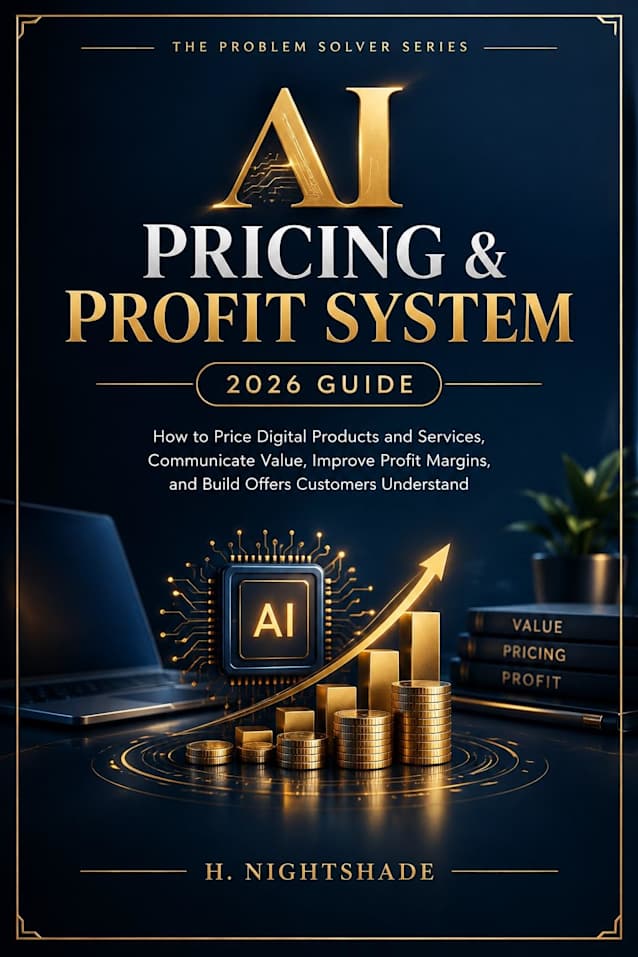
AI PRICING & PROFIT SYSTEM 2026 Guide: How to Price Digital Products and Services, Communicate Value, Improve Profit Margins, and Build Offers Customers Understand (The Problem Solver Series Book 27)
About
Stop Guessing What Your Products Are Worth. Start Making Smarter Pricing Decisions.
You have a product to sell. You have a service people need. You may even have an audience, a website, or a marketing strategy that brings potential customers to your door.
But one critical question can determine whether your business grows, struggles, or quietly loses money:
Are you charging the right price?
Set your price too low, and you may work harder than necessary while leaving little room for profit. Set it too high without communicating the value, and potential customers may walk away without understanding what makes your offer worth buying. Follow competitors blindly, and you risk building your entire pricing strategy around someone else’s business rather than your own.
The solution isn’t to guess, copy the market, or keep offering discounts whenever sales slow down. It’s to understand how pricing works and develop a practical system for making better decisions.
AI Pricing & Profit System is a practical guide to pricing digital products and services with greater clarity, confidence, and commercial awareness.
Inside, you’ll discover how to:
- Choose a Pricing Strategy: Understand cost-based, competitor-based, and value-based pricing, and learn when each approach may be appropriate.
- Price Digital Products More Strategically: Apply practical pricing principles to ebooks, online courses, templates, software tools, digital downloads, and other information products.
- Build Profitable Service Packages: Structure freelance services, consulting offers, and service tiers so customers can understand the differences and choose the option that fits their needs.
- Understand Your Profit Margins: Account for platform fees, transaction costs, production expenses, delivery costs, and other expenses that can quietly reduce your earnings.
- Calculate Your Break-Even Point: Determine how many sales you need to cover your costs before evaluating whether an offer can support your business goals.
- Communicate Value More Effectively: Explain what customers receive, which problems your offer addresses, and why its benefits may justify the price.
- Use AI as a Pricing Assistant: Develop prompts and workflows for organizing competitor information, analyzing customer feedback, exploring pricing scenarios, and identifying questions worth investigating.
- Test Prices With Greater Discipline: Compare pricing options, define meaningful performance measures, and avoid drawing conclusions from insufficient data.
- Evaluate Discounts and Promotions: Recognize when a discount may encourage purchases and when it may simply reduce the profit from customers who would have paid full price.
- **Refine Your Pricing as You Grow: Revisit your prices as your skills, costs, product quality, customer expectations, and competitive environment change.
You don’t need to be a financial analyst or an experienced pricing consultant to begin. What you need is a willingness to examine your numbers, understand your customers, and make decisions based on evidence rather than habit.
Artificial intelligence can help you organize information and explore possibilities, but it cannot guarantee that a price will succeed. This book shows you how to use AI as a practical decision-support tool while keeping your business judgment at the center of the process.
Your price is more than a number. It is a business decision that connects customer value, market demand, costs, and profitability.
Learn to make that decision with a system instead of a guess.